Get Up to 40% OFF New Furniture Deals * Limited time only.

A Guide to Moroccan Rug Styles, Traditions, and Craftsmanship

Moroccan rugs hanging near a door in Chefchaouen

Handwoven rugs from Morocco are admired not only for their beauty, but for the cultural depth and human stories embedded in every thread. Created within “Amazigh” communities, these textiles reflect a way of life shaped by landscape, heritage, and personal expression. This guide explores the traditions behind Moroccan weaving, the regional styles that define it, and how to understand these rugs beyond surface aesthetics—helping you appreciate their meaning, craftsmanship, and place in a thoughtfully designed home.

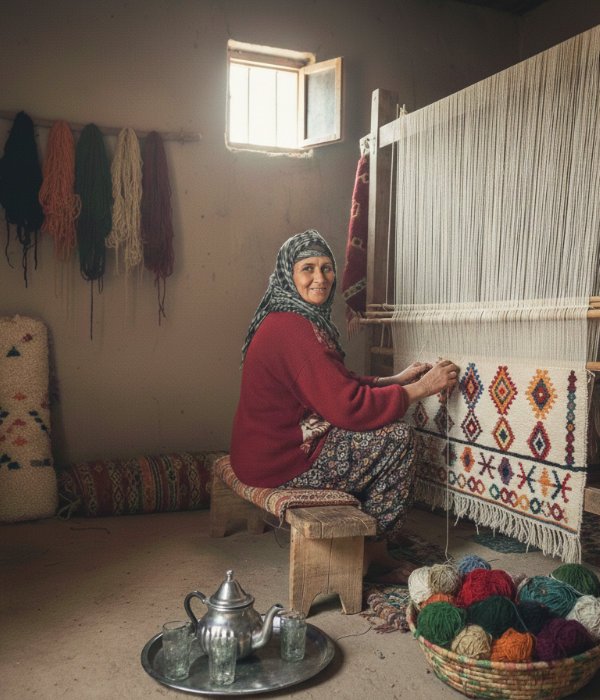
old women weaving a moroccan berber rug

The Cultural Origins of Berber Weaving

Rug weaving in Morocco has historically been a domestic and communal craft rather than a commercial one. Women wove rugs for warmth, sleeping, ceremonies, and family life, often working intuitively without pre-drawn patterns. Motifs emerged from memory and experience, symbolizing protection, fertility, nature, or milestones.

Because these rugs were created for personal use, authenticity became their defining characteristic. Variations in pattern, asymmetry, and color shifts are natural results of this deeply human process and are now considered hallmarks of true craftsmanship.

Materials and Traditional Techniques

Most traditional Moroccan textiles are woven from sheep’s wool, valued for its durability, insulation, and softness. Wool is often hand-spun and dyed using regionally inspired palettes, producing subtle tonal variations rather than uniform color.

Weaving is done on vertical or horizontal looms, depending on the region. The pace is slow and deliberate, allowing the artisan to respond intuitively to the rug as it takes shape. These techniques result in textiles that are resilient, tactile, and expressive—designed to age gracefully rather than wear out.

Regional Rug Styles and Their Identities

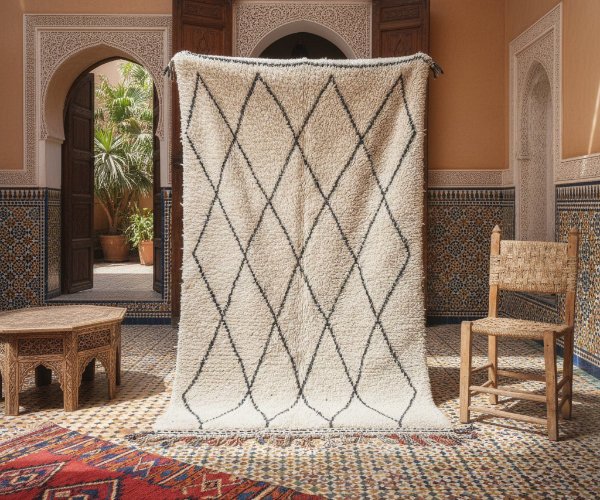
Beni ouren moroccan carpet

Minimalist Mountain Rugs

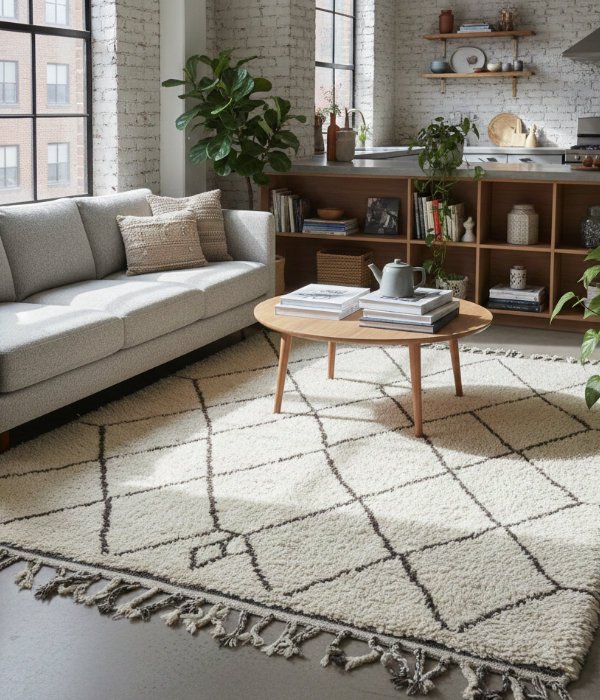
Rugs from the Middle Atlas are often characterized by neutral backgrounds and simple geometric motifs. Styles such as Beni carpet reflect a restrained aesthetic that pairs naturally with contemporary interiors, emphasizing texture and material over ornament.

Expressive High Atlas Rugs

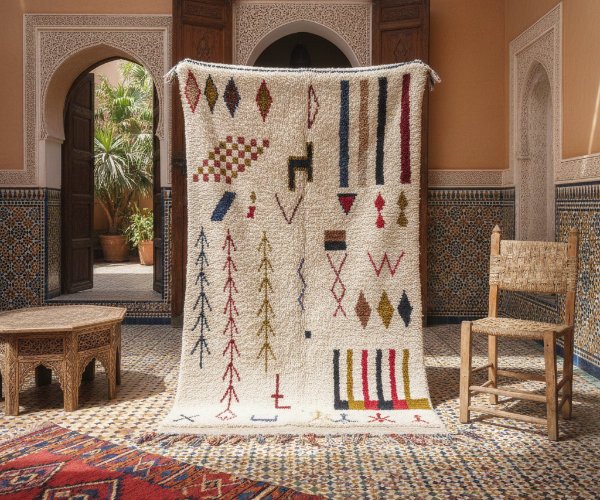
In contrast, rugs woven in the High Atlas region tend to be more colorful and symbolic. Azilal pieces often feature abstract patterns and unexpected color combinations, making them feel closer to woven artworks than traditional floor coverings.

Azilal moroccan carpet
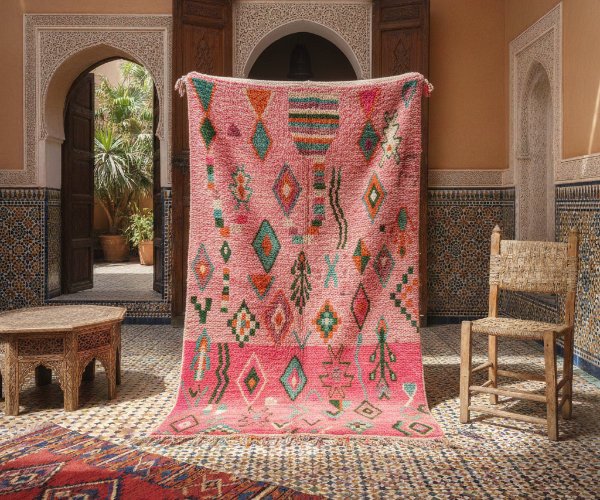
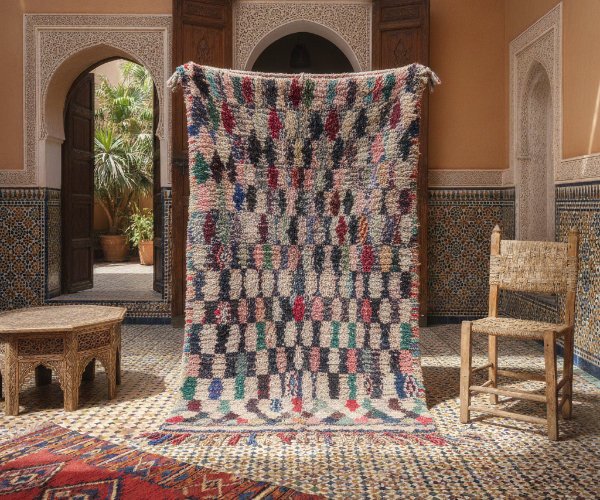
Boujaad moroccan carpet

Warm-Toned Plains Rugs

Rugs from central Morocco are known for their warmer palettes—rose, terracotta, deep red, and ochre. Boujaad styles bring warmth and visual depth, working beautifully in living spaces that benefit from softness and contrast.

Recycled Textile Rugs

More contemporary in origin, Boucherouite rugs are made from recycled fabrics. Their bold textures and colors celebrate sustainability and creativity, offering a striking alternative to wool-only weavings.

Boucharouit moroccan carpet
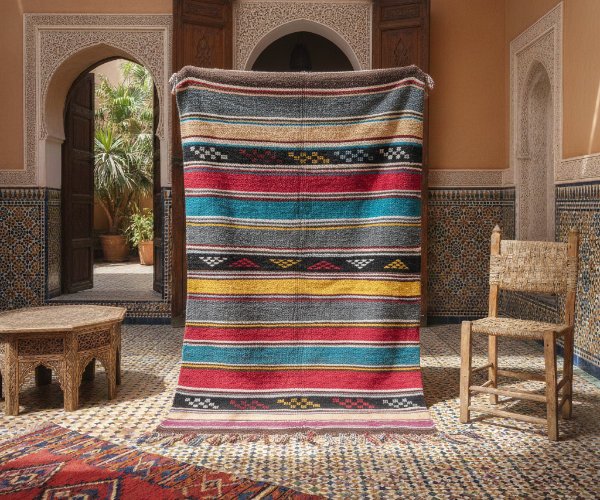
Kilim moroccan carpet

Flatwoven Rugs and Narrow Formats

Flatweaves such as Kilim rugs and elongated Runners are practical choices for high-traffic areas, dining rooms, and layered interiors, valued for their lightweight structure and versatility.

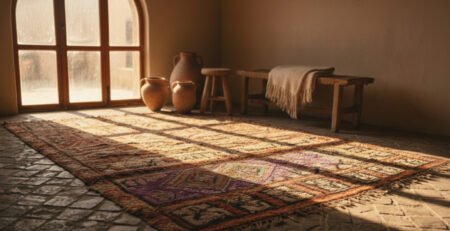
For those drawn to timeworn character, a Vintage rug carries visible history—softened fibers, faded pigments, and the quiet beauty of age.

Moroccan Berber carpet in a contemporary apartment

How to Choose the Right Rug for Your Space

Choosing a handwoven rug begins with understanding how it will be used. Plush, high-pile rugs bring comfort to living rooms and bedrooms, while flatwoven styles are better suited to dining areas or entryways.

Scale is essential. A rug that is too small can feel disconnected, while one with the right proportions grounds a room and creates cohesion. Color choice should complement your interior rather than dominate it—neutral tones offer calm, while expressive pieces become focal points.

Beyond practical considerations, the most important factor is connection. These rugs are emotional objects, meant to resonate with the person who lives with them.

To see how traditional craftsmanship translates into curated interior pieces, you can explore our curated Moroccan rug collection.

Understanding Care and Longevity

Handwoven wool rugs are naturally resilient, but thoughtful care extends their life significantly. Regular gentle vacuuming, rotating the rug to distribute wear, and avoiding harsh chemicals are simple but effective practices.

For deeper guidance on cleaning, maintenance, and professional care, consult our detailed rug care guide, which covers long-term preservation techniques for handmade rugs.

Why These Rugs Remain Timeless

In an era of mass production, Moroccan weaving stands apart. Each rug represents patience, skill, and individuality—qualities that do not follow trends. Their imperfections are not flaws, but evidence of the human hand.

These textiles integrate seamlessly into modern homes because they are grounded in authenticity. They offer warmth without excess, character without noise, and beauty that deepens rather than fades with time.

Conclusion

Understanding Moroccan rug traditions allows you to see these pieces not simply as décor, but as cultural expressions shaped by place, memory, and craftsmanship. Whether minimal or expressive, new or vintage, each rug carries a story that continues in your home—quietly, beautifully, and over time.

Share this post

Leave a Reply


Discover more from ASALA LIVING

Subscribe now to keep reading and get access to the full archive.

Continue reading

What Our Clients Say
346 reviews