
A Collector’s Guide to Moroccan Vintage Rugs

Moroccan rugs are far more than mere floor coverings—they are woven pieces of cultural history, each carrying the legacy of generations of skilled artisans. From the soft wool of the Atlas Mountains to the intricate patterns of tribal weavers, these rugs encapsulate a world of tradition, storytelling, and artistry.
For enthusiasts and collectors alike, understanding Moroccan vintage rugs is an invitation to explore authentic craftsmanship, regional heritage, and the subtle beauty of natural materials. Every rug tells a story, and for those who appreciate history in texture and design, owning one is like keeping a piece of Morocco’s soul in your home.
Table of Contents
History & Origins
The art of rug-making in Morocco is deeply intertwined with the lives of Berber tribes who have inhabited the Atlas Mountains and surrounding regions for centuries. Each tribe developed its own weaving techniques, color palettes, and symbolic motifs, resulting in a rich diversity that continues to captivate collectors today.

Regional Styles and Signatures
In the northern highlands, the Beni Ourain weavers created thick, ivory rugs adorned with geometric patterns, their designs echoing the stark beauty of the mountains. To the east, the Azilal region became known for abstract and vibrant patterns, a reflection of both local tradition and modern influence. Boujaad rugs, delicate and decorative, convey the artistry of smaller communities, while the Midelt and Ouarzazate regions produced rugs inspired by desert landscapes, nomadic life, and local rituals.
Vintage pieces from these regions carry subtle signatures—a particular knotting technique, a muted color, or a symbolic motif—that speak volumes about the culture and environment in which they were made.
How to Identify Authentic Vintage Rugs
Identifying an authentic Moroccan vintage rug is a skill that blends observation with intuition.
Weaving Techniques
Hand-knotted rugs possess a subtle depth and texture that machine-made imitations lack. The knots may be slightly irregular, a testament to the human touch behind each piece, and the wool often retains a softness that only comes from natural fibers.
Materials and Dyes
Natural dyes give vintage rugs their distinctive warmth, colors that shift gently with age and light. Over decades, these hues mellow, creating the soft patina that collectors prize. In contrast, rugs with unnaturally bright colors or perfectly uniform patterns may signal mass production rather than artisanal craftsmanship.
Signs of Age and Authenticity
Vintage rugs display gentle fading, softening, and slight irregularities—marks of use and time that add character. Provenance—the rug’s story, its origin, and the journey it has taken—matters as much as its appearance, linking the piece back to a region, a tribe, and a lineage of skilled weavers.
Appreciating Patterns and Motifs
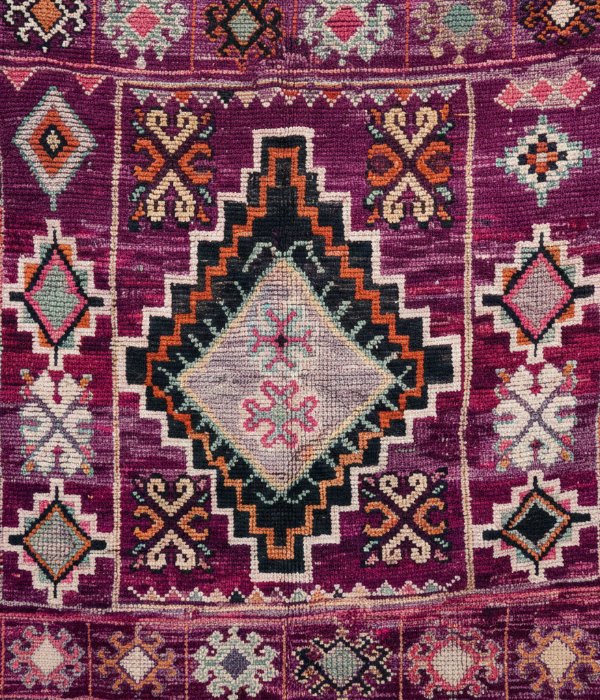
Moroccan vintage rugs are woven narratives, where every motif and symbol carries meaning. Fertility, protection, and elements from nature—mountains, rivers, and flora—can all appear in a rug’s design.
Regional Variations
Beni Ourain rugs tend to favor geometric minimalism, reflecting serene mountain landscapes, while Azilal rugs are known for bold, abstract lines that reveal the weaver’s personal expression. Recognizing these differences enriches the collector’s understanding and appreciation of each piece.
The Beauty of Irregularities
Slight asymmetry or irregular motifs are not flaws; they highlight the human labor and craftsmanship behind each rug. These intentional imperfections give vintage Moroccan rugs their distinctive charm.
Collecting Considerations
For collectors, age, rarity, and condition are crucial factors, but there is more to consider than mere aesthetics. Some rugs are chosen for their decorative appeal, while others are sought for investment or historical significance.
Provenance is especially important: a documented origin ensures authenticity and supports ethical collecting. Trusted dealers, auctions, and curated collections are the most reliable sources for genuine pieces.
Explore our curated Vintage Rug collection to see hand-selected Moroccan rugs that honor traditional craftsmanship.
Caring for Vintage Rugs
Preserving a vintage Moroccan rug ensures it continues to tell its story for decades.
Maintenance Tips
Gentle vacuuming and careful cleaning help maintain the fibers without compromising the handwoven structure.
Handling Sunlight and Storage
Avoid prolonged sunlight and damp conditions, which can damage fibers and fade natural dyes. When storing rugs, roll them in a dry, ventilated space rather than folding them to prevent creases.
Professional Restoration
Any repairs should be undertaken by skilled professionals to preserve both pattern integrity and original materials.
Displaying and Styling
Vintage Moroccan rugs are versatile, lending warmth, texture, and sophistication to any space.
Creative Ways to Display
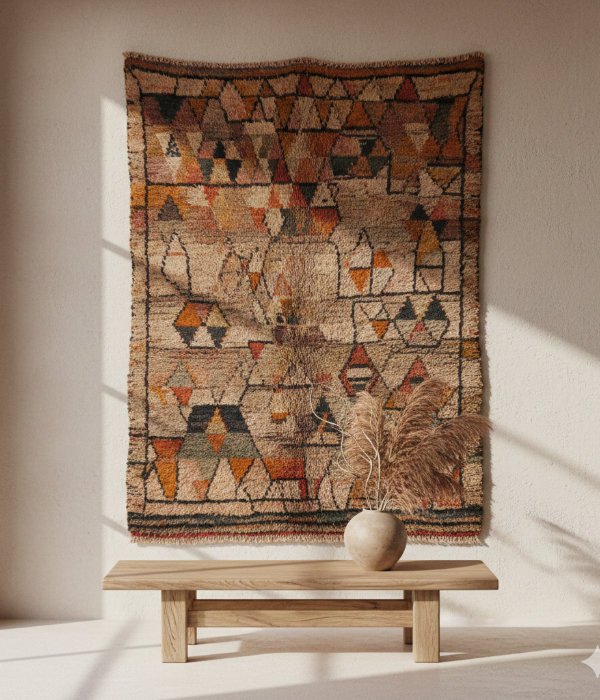
Rugs can be hung on walls as art, layered for depth and visual interest, or placed under furniture to create cozy, elegant spaces.
Integrating with Modern Interiors
Pairing vintage rugs with neutral tones and minimalist décor ensures the craftsmanship stands out while blending seamlessly into contemporary homes.
Conclusion
Moroccan vintage rugs are living pieces of art, woven with skill, symbolism, and history. Understanding authenticity, patterns, provenance, and care transforms ownership into a meaningful experience.
Whether chosen for aesthetic enjoyment or serious collection, these rugs bring a tangible connection to Moroccan heritage into any home. More than decorative objects, they are storied companions that enrich spaces with texture, warmth, and timeless artistry.

Leave a Reply
You must be logged in to post a comment.