
The Beni Ouarain Tribe: A Living Amazigh Heritage of the Moroccan Atlas

Who Are the Beni Ouarain?
Table of Contents
Origins and Geographic Roots
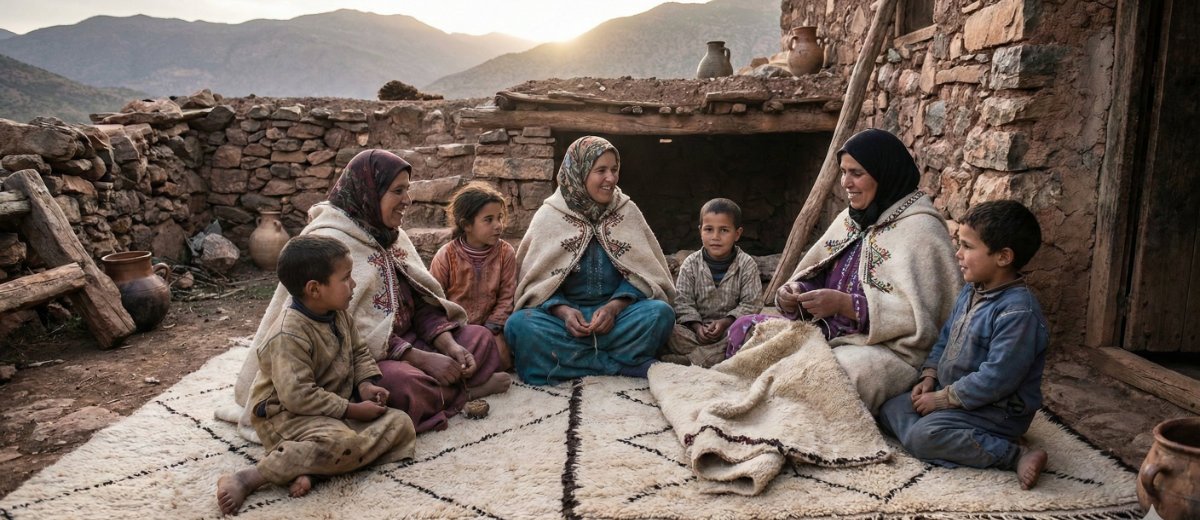
The Beni Ouarain originate from the Middle Atlas Mountains, particularly the regions of Azilal, Khénifra, and Ifrane. This territory experiences long winters, high altitude, and dramatic seasonal shifts. Consequently, the tribe developed a lifestyle centered on mobility, cooperation, and resilience.
For generations, families followed a nomadic or semi-nomadic pastoral rhythm, moving their sheep across grazing lands in response to climate and pasture. Therefore, everything they produced — clothing, shelters, and textiles — needed to offer warmth, durability, and practicality. Ornamentation remained secondary to function, yet beauty naturally emerged through use.
As part of Morocco’s indigenous Amazigh population, the Beni Ouarain carry traditions that predate Arab and Islamic influence in the region. Their language, symbols, and oral histories still reflect this ancient heritage. Even today, these elements remain active rather than symbolic, shaping everyday life instead of merely recalling the past.
Lifestyle and Social Organization
Beni Ouarain society revolves around extended family units and tribal solidarity. Rather than emphasizing individual ownership, the community values shared labor, collective memory, and mutual support. As a result, daily life unfolds according to seasonal cycles instead of rigid schedules.
Men traditionally focus on herding and external relations, while women manage domestic life and artistic creation. However, these roles do not function hierarchically. Instead, they complement one another, forming a balanced system essential to cultural continuity.
Women as Keepers of Cultural Memory
Within this structure, women act as carriers of knowledge and identity. Through weaving, storytelling, and ritual practice, they preserve both collective values and personal histories. Moreover, mothers transmit skills directly to their daughters through observation and practice, not written instruction.
Because oral tradition plays a central role, memory takes material form. Rugs, therefore, become vessels of lived experience rather than decorative objects. Each knot anchors a moment, a belief, or a transition in life.
The Art of Beni Ouarain Weaving
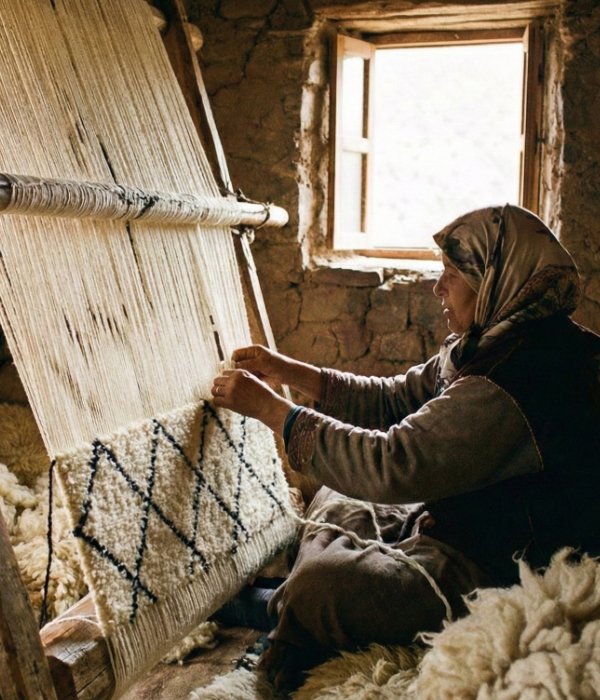
Among the Beni Ouarain, weaving integrates seamlessly into daily life. Women weave during moments of rest, conversation, or reflection. Historically, families used rugs for sleeping, warmth, prayer, and childbirth, which gave these textiles deep emotional significance.
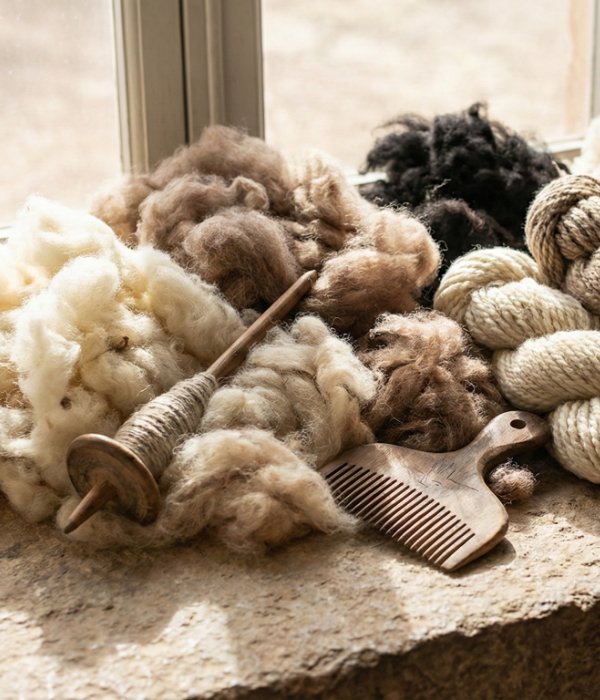
The weavers source wool from local Middle Atlas sheep, prized for its thickness and insulating quality. After shearing, women wash the wool in mountain water, hand-card it, and spin it themselves. Because this process demands time and physical effort, it reinforces a slow, deliberate rhythm of creation.
Each rug requires several months of work. The weaver rarely follows a predefined pattern. Instead, she allows intuition, memory, and emotion to guide the design. Consequently, no two rugs ever appear the same.
Symbols, Motifs, and Meaning
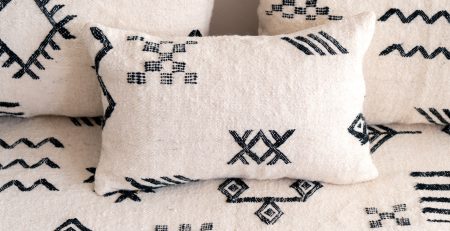
At first glance, Beni Ouarain rugs appear minimalist. Yet beneath their simplicity lies a complex symbolic language rooted in Amazigh belief systems. Diamonds, lines, crosses, and abstract forms recur not for decoration, but for meaning.
Diamonds often symbolize femininity, protection, or fertility. Meanwhile, linear motifs suggest journeys, continuity, or life transitions. Some symbols serve as protective talismans, intended to guard the household and its inhabitants.
Most importantly, each rug tells a personal story. Because weavers do not follow standardized designs, they embed life experiences directly into the composition. In this way, rugs function as woven autobiographies, carrying stories that words never record.
Natural Colors and Materials
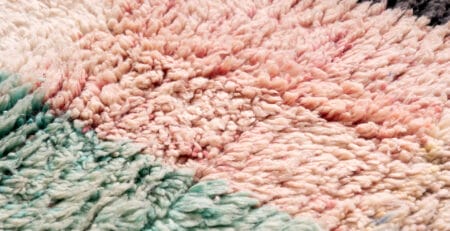
Traditionally, Beni Ouarain rugs rely on undyed wool, producing tones of ivory, cream, and natural black. These hues reflect the surrounding landscape — snow, stone, soil, and sheep — reinforcing the bond between material and environment.
When color appears, artisans derive it from natural pigments, such as plants or minerals. Rather than correcting variations, weavers accept them as part of the process. Therefore, subtle irregularities become markers of authenticity rather than flaws.
Beni Ouarain Rugs in Contemporary Design
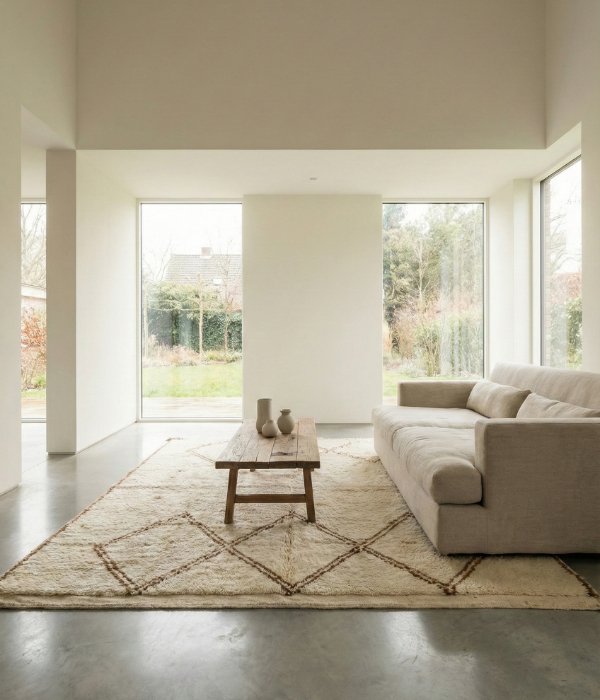
During the twentieth century, architects and designers began to appreciate Beni Ouarain rugs for their timeless aesthetic. Their neutral palette and abstract patterns complemented modern spaces without overpowering them. As a result, these textiles transitioned naturally into contemporary interiors. Today, authentic beni carpets continue to bridge traditional craftsmanship and modern living, bringing warmth, texture, and cultural depth into refined spaces.
Cultural and Economic Importance Today
Today, weaving provides many Beni Ouarain women with economic independence while allowing them to remain connected to tradition. However, mass production and imitation now threaten both livelihoods and cultural integrity.
Because of this, ethical sourcing and fair trade play a critical role. Supporting authentic craftsmanship ensures that skills remain valued, transmitted, and economically viable. Ultimately, preservation depends not on nostalgia, but on respect and responsibility.
Conclusion – A Living Heritage
The Beni Ouarain tribe represents far more than an aesthetic tradition. Their rugs embody patience, memory, and resilience. Each piece carries the imprint of a life lived in dialogue with nature and community.
When a Beni Ouarain rug enters a home, it brings more than texture or warmth. It introduces a living heritage, woven slowly and intentionally. Preserving this craft means honoring the people behind it — and allowing their stories to continue, knot by knot, into the future.


Leave a Reply
You must be logged in to post a comment.